
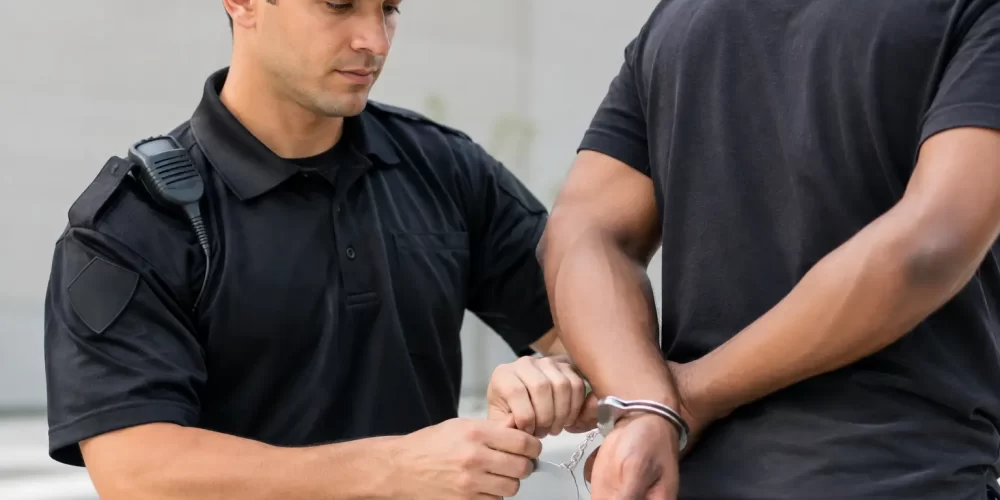
Handcuffing Training for Security Guards That Counts
A person refusing to leave a property, a suspected theft, or an escalating argument can change a guard’s shift in seconds. Handcuffing training for security guards is not about treating restraints as a routine answer to difficult behavior. It is about knowing when restraint is legally justified, how to apply it safely under approved policy, and when verbal de-escalation or a call for law enforcement is the better response.
For guards, loss-prevention staff, event personnel, and protection professionals, handcuffing is a serious use-of-force skill. A credential may strengthen your qualifications, but the real value of training is the ability to make disciplined decisions when pressure is high and the facts are incomplete.
Handcuffing Is a Force-Management Decision
Handcuffs can prevent a person from striking, fleeing, or harming others. They can also create significant risk when used without legal authority, reasonable grounds, proper control, or ongoing monitoring. That is why a quality course treats handcuffing as one part of force management rather than an isolated physical technique.
Security professionals must understand the limits of their role. Authority to detain, arrest, restrain, search, or use force depends on the jurisdiction, the assignment, the client’s policy, and the circumstances. A guard should never assume that carrying handcuffs creates authority to use them. Company policy can be more restrictive than the law, and a client site may impose additional procedures.
The decision to restrain should be based on behavior and an identifiable safety or security need, not frustration, disrespect, intoxication alone, or a refusal to cooperate. Professional training helps guards recognize the difference between a difficult person and an immediate situation that requires physical control.
De-escalation remains the first working option whenever conditions allow. Clear commands, distance, cover, communication with a partner, and timely requests for assistance can often resolve an incident before physical contact becomes necessary. If force is unavoidable, it must remain reasonable, necessary, and proportionate to the threat presented.
What Quality Handcuffing Training Covers
A serious handcuffing course should connect judgment, physical safety, policy, and documentation. Learners need more than a demonstration of equipment. They need a repeatable process for recognizing risk, responding within their authority, and accounting for their actions afterward.
Legal Awareness and Scope of Authority
The first question in any restraint incident is not how to apply handcuffs. It is whether the guard has a lawful and policy-supported reason to intervene. Training should address detention and arrest concepts relevant to the learner’s jurisdiction, the difference between a security role and law enforcement authority, and the legal exposure created by unnecessary force.
This does not mean a course can provide personal legal advice. It does mean that trained personnel should know where their authority begins and ends, when to contact a supervisor or police, and why local statutes and employer policies must guide every decision. Guards working across multiple states, provinces, or venues should be especially careful: procedures that are permitted in one setting may be prohibited in another.
Equipment Knowledge and Control Principles
Handcuffs are safety equipment, not a symbol of status. Training should cover inspection, proper fit, double-locking, key control, safe storage, and recognition of equipment defects. A guard also needs to understand why uncontrolled movement, poor positioning, or attempting to restrain someone alone can increase danger for everyone involved.
Practical instruction should emphasize communication, safe positioning, the role of backup, and the need to avoid unnecessary struggle. The goal is control with the least force reasonably necessary, not winning a physical contest. An instructor-led skills component is especially valuable because physical restraint requires observation, correction, and practice under realistic but controlled conditions.
Medical Risk and Ongoing Monitoring
A person in restraints must be treated as someone who may have a medical emergency, not simply as a completed task. A quality program teaches guards to watch for visible injury, breathing problems, signs of distress, altered consciousness, and statements that the person needs medical help.
Guards should follow agency policy and emergency procedures, request medical assistance when needed, and transfer custody as soon as appropriate. Once a person is restrained, the duty to monitor does not end. Leaving a restrained individual unattended, placing them in an unsafe position, or ignoring signs of distress can turn a controlled incident into a serious emergency.
This is also where scenario-based training matters. A calm, cooperative subject creates different considerations than an actively resisting person, someone in a mental health crisis, or an individual affected by alcohol or drugs. There is no single response that fits every scenario. The trained professional slows the situation down when possible and recognizes when additional resources are necessary.
Reporting and Professional Accountability
The report may be reviewed long after the physical event is over. It should clearly explain what happened, what the guard observed, what de-escalation efforts were attempted, why restraint was necessary, what force was used, whether injuries or medical concerns were identified, and who was notified.
Strong reporting is factual, specific, and free of emotional language. Write what the person did, not labels or assumptions about why they did it. Preserve available evidence, identify witnesses, and complete required notifications promptly. Professional documentation protects the public, the client, the agency, and the guard who acted appropriately.
Certification Supports Qualifications, Not Permission
A handcuffing certificate can demonstrate that you completed recognized instruction and invested in a specialized security skill. It can help strengthen a resume, meet employer training expectations, and show clients or supervisors that you take force management seriously. Physical and digital proof of completion, such as a certificate and wallet ID card, can also make your credentials easier to present during hiring or assignment reviews.
But certification is not a license to use force and does not override state law, local requirements, employer policy, or site rules. It also does not replace regular practice. Skills fade when they are not reviewed, particularly under stress. Agencies should establish refresher training, scenario practice, equipment checks, and clear reporting standards rather than treating a one-time course as permanent readiness.
For individual learners, the same principle applies. If your work changes from retail loss prevention to event security, executive protection, healthcare security, or patrol, reassess the risks and policies of the new environment. Your credential remains valuable, but your operational decisions must fit the assignment in front of you.
Online Learning and Hands-On Assessment
Online instruction can be an efficient way to complete foundational education on legal considerations, use-of-force principles, reporting, de-escalation, equipment knowledge, and medical-risk awareness. It gives working professionals a practical route to build qualifications around demanding schedules.
However, online learning has limits. Physical skills are best reinforced through qualified instruction, supervised practice, and assessment that confirms a learner can apply approved procedures safely. The right training format depends on the credential, employer requirements, local regulations, and whether the course includes a hands-on evaluation.
Before enrolling, ask whether the course explains its learning objectives, assessment process, certificate issued, and any practical component. Also ask whether the program addresses the policies and laws that affect your work area. Clear answers are a sign of a provider that takes professional readiness seriously.
GC Tactical Training approaches handcuffing education as part of a broader force-management pathway that also includes de-escalation, use of force, OC spray, baton, and workplace safety instruction. That broader view matters because real incidents do not arrive as separate subjects. They require judgment, communication, restraint, and accountability at the same time.
Build a Career on Controlled Decisions
Employers look for guards who can protect people and property without creating unnecessary risk. Handcuffing training can add a meaningful qualification to your professional profile, especially when it is paired with de-escalation, incident reporting, and a clear understanding of your legal scope.
The strongest security professionals do not reach for restraints to prove control. They develop the confidence to recognize when control means giving commands, creating distance, calling for support, documenting carefully, or using approved restraint only when the situation truly requires it. Train for that judgment, keep your skills current, and let every credential reflect the level of responsibility the role demands.
Leave a Reply
You must be logged in to post a comment.