
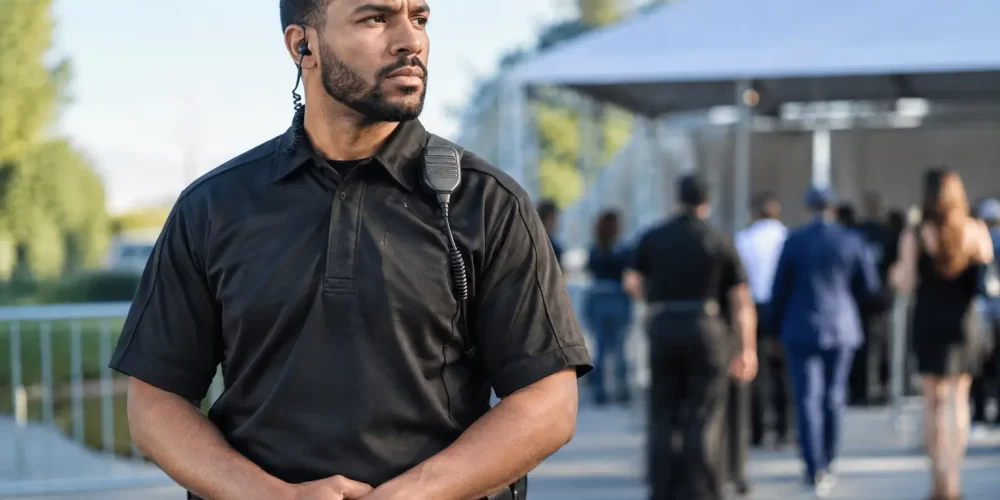
What Event Security Training Certification Covers
A crowded entry line, an intoxicated guest, a medical concern near the stage, and a dispute between attendees can all demand immediate judgment. Event security training certification prepares personnel to recognize risk early, communicate with authority, and make responsible decisions before a situation becomes a serious incident.
For security professionals, event work is not simply standing at a door or walking a perimeter. It requires public-facing professionalism, clear observation, controlled intervention, and a working understanding of when to request assistance. The right credential supports employability, but its real value is in helping personnel protect people, property, and their own professional standing.
Why Event Security Requires Specialized Preparation
Events create conditions that can change quickly. Large crowds, unfamiliar venues, alcohol service, restricted areas, high-profile guests, changing weather, and limited access routes all affect how security personnel must operate. A guard who performs well in a quiet retail setting may still need additional preparation before working a concert, sporting event, festival, convention, or private function.
The primary responsibility is prevention. Effective event personnel watch for changes in behavior, identify access-control concerns, communicate emerging issues to the team, and use presence to discourage misconduct. This means remaining alert without appearing confrontational. Guests should see organized, professional security, not an unnecessarily aggressive posture.
Training also supports consistency across a team. When every member understands reporting procedures, radio communication, escalation thresholds, and their role during an emergency, supervisors can manage incidents with greater control. Confusion is costly at an event. Clear procedures reduce delays, mixed messages, and avoidable physical confrontations.
What Event Security Training Certification Should Include
A meaningful event security training certification should go beyond a completion screen. It should address practical decisions that personnel face while working around the public, including conflict prevention, professional communication, documentation, and lawful response.
Verbal De-escalation and Crisis Intervention
Many event incidents can be resolved before physical intervention is needed. A guest may be angry about denied entry, separated from friends, challenged about identification, or frustrated by a venue policy. The security professional must set boundaries without provoking further resistance.
De-escalation training teaches personnel to listen, use clear commands, maintain appropriate distance, avoid inflammatory language, and offer reasonable options when appropriate. It does not mean tolerating threats or unsafe conduct. It means using communication as the first operational tool whenever conditions allow.
This distinction matters. A security officer who can lower tension protects the guest experience, reduces injury risk, and demonstrates the restraint employers expect from trained personnel.
Use of Force Awareness and Decision-Making
Physical intervention is a serious responsibility, not a routine customer-service tool. Training should emphasize necessity, proportionality, documentation, and the legal and organizational limits that govern a security role. Personnel need to understand that force decisions are judged by the facts available at the time, their training, their policies, and applicable law.
The appropriate response depends on the threat, the environment, the available support, and the individual’s behavior. A verbal disagreement may call for separation and observation. An active assault may require immediate protective action and emergency services. Training gives professionals a framework for assessing those differences instead of reacting emotionally.
Use-of-force education should also reinforce after-incident responsibilities. Security personnel may need to preserve evidence, identify witnesses, notify a supervisor, complete reports, and cooperate with responding law enforcement or medical personnel. The incident is not over when the immediate behavior stops.
Access Control, Observation, and Incident Reporting
Entry points are where event security often succeeds or fails. Staff must verify credentials, enforce venue rules, identify prohibited items, manage lines, and recognize signs of impairment or potential conflict. These duties require attention to detail and the confidence to enforce policy respectfully.
Observation skills are equally important inside the venue. Personnel should know how to notice suspicious behavior, unattended property, attempts to access restricted zones, crowd pressure points, and disputes that are beginning to attract attention. Early reporting allows a supervisor to assign resources before an issue spreads.
Accurate reports protect both the employee and the organization. A professional report records observable facts: who was involved, what occurred, where and when it happened, what actions were taken, and who was notified. Opinions, exaggerated language, and unsupported conclusions can weaken the credibility of an otherwise sound response.
Defensive Tools and Role-Specific Certifications
Some event assignments may require additional qualifications for handcuffing, baton use, or OC pepper spray. These tools should never be treated as standard solutions to noncompliance. They require dedicated instruction, policy authorization, and an understanding of local legal requirements.
A credential in a defensive tool demonstrates that a learner has completed a defined training program. It does not automatically grant permission to carry or deploy that tool at every job site. Employers, venue policies, contracts, insurance requirements, licensing authorities, and local laws may impose stricter standards. Professionals verify those requirements before accepting an assignment.
Certification Is Valuable, but It Does Not Replace Licensing
This is one of the most important distinctions for new security professionals. Event security training certification can strengthen qualifications and demonstrate completed education, but it may not replace a state, provincial, municipal, or agency licensing requirement. Requirements vary significantly by jurisdiction and by job function.
Before enrolling, review the standards that apply where you intend to work. Some positions require a security license, background screening, first aid or CPR credentials, employer-specific orientation, or approved training for particular equipment. If you work across state lines or with touring events, confirm requirements for each location rather than assuming one credential covers every assignment.
Professional training is still worthwhile even when it is not a licensing substitute. It gives applicants relevant knowledge to discuss during hiring, helps experienced guards qualify for more demanding assignments, and provides documented evidence of continuing professional development.
How to Choose the Right Training Program
The best program depends on the work you want to perform. A new guard seeking event assignments may benefit most from de-escalation, incident reporting, use-of-force awareness, and access-control fundamentals. An experienced professional working executive protection or high-risk venues may need additional role-specific qualifications.
Look for instruction that explains practical application, not just terminology. Good training should help you understand how to communicate under pressure, recognize when an issue is outside your authority, and document your actions clearly. Scenario-based learning is especially useful because event work rarely presents neat, predictable conditions.
Credential format also matters. Digital certificates are convenient for records and job applications, while physical wall certificates, wallet cards, and patches can provide visible proof of qualification where appropriate. Internationally recognized certification can be particularly useful for professionals who work with agencies, venues, or clients across multiple regions, provided it is paired with local compliance.
GC Tactical Training delivers certification-focused instruction designed to help frontline personnel build practical qualifications in conflict management, use-of-force awareness, defensive tools, and workplace safety. The strongest course choice is one that matches your actual responsibilities and supports the standards of the employer or agency you plan to serve.
Turning Training Into Professional Readiness
Certification should change how you work. After completing training, review your employer’s post orders, emergency procedures, reporting standards, communication channels, and equipment policies. Ask supervisors how the venue handles ejections, lost children, medical incidents, suspicious packages, severe weather, and police contact. Knowing the course material is valuable; knowing how it applies at your assigned location is essential.
Maintain your credentials and keep copies available when applying for assignments. Refresh skills regularly, especially if you have not used them in the field. De-escalation language, report-writing habits, and defensive-tool knowledge can decline without practice.
The professional standard is simple: arrive prepared, stay observant, communicate early, and respond only within your training and authority. That approach builds the kind of reputation that leads to better assignments, stronger trust from supervisors, and safer outcomes for everyone at the event.