
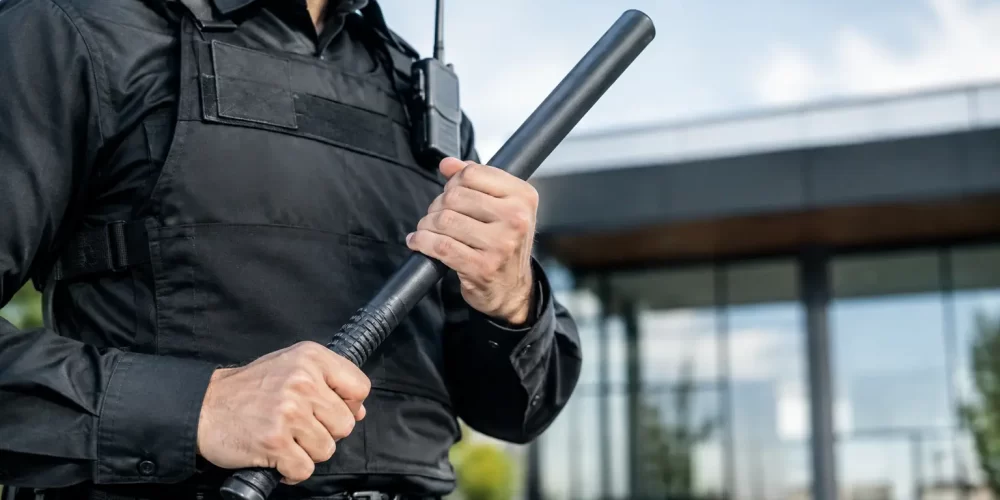
Baton Certification for Security Guards Explained
A baton on a duty belt is not a symbol of authority. It is a force option with serious legal, physical, and professional consequences. Baton certification for security guards helps personnel understand when that option may be justified, how to carry and handle it responsibly, and why avoidance and de-escalation must come first whenever they can safely resolve the situation.
For guards working retail floors, event venues, residential properties, hospitals, corporate sites, or loss-prevention assignments, a recognized credential can also strengthen professional credibility. The value is not simply having another certificate. It is being able to show employers, clients, and supervisors that you have received structured instruction in force management rather than relying on assumptions or improvised techniques.
What Baton Certification for Security Guards Covers
Quality baton training is part of a broader use-of-force education. A guard should never view a baton as the first response to noncompliance, verbal abuse, or a difficult customer. The central purpose of training is to develop sound judgment under pressure: recognize risk, communicate clearly, create distance when possible, request support, and use only the level of force that is reasonable and permitted by law and policy.
A professional certification program typically addresses the operational and decision-making areas that affect real assignments:
- legal authority, duty limitations, and employer policy
- use-of-force principles, proportionality, and reasonable response
- baton carry, retention, presentation, and safe handling
- target-area awareness and the risks of serious injury
- verbal commands, distance management, and disengagement
- incident reporting, evidence preservation, and post-incident responsibilities
The precise curriculum matters. Some courses are designed as foundational awareness training, while others include hands-on drills and instructor evaluation. Online education can provide accessible instruction in policy, decision-making, reporting, and use-of-force concepts. Practical deployment skills require appropriate supervision, a safe training environment, and compliance with the requirements of the guard’s employer and jurisdiction.
Why Certification Matters Beyond the Certificate
Security work often involves quick decisions with incomplete information. A person refusing to leave may be intoxicated, experiencing a mental health crisis, trying to provoke a reaction, or simply misunderstanding an instruction. Training helps guards slow the encounter down when conditions allow and identify alternatives before a physical response becomes necessary.
That judgment protects everyone involved. It can reduce the chance of injury to the public, the guard, coworkers, and bystanders. It can also reduce exposure to complaints, civil claims, lost contracts, disciplinary action, and damage to a security professional’s career.
Certification gives a guard a documented training record, but documentation alone does not make a force decision lawful. The circumstances at the moment of the incident still control. A credential should support competent performance, not create false confidence or encourage unnecessary intervention.
Employers also benefit when team members have a common force-management vocabulary. Supervisors can set clearer expectations for reporting, radio communication, escalation procedures, and requests for police or medical support. Consistency is especially valuable on large teams where guards rotate between posts or work alongside customer service, facilities, healthcare, or event staff.
Certification Requirements Depend on Your Location and Assignment
There is no single rule that applies to every security guard in the United States. State laws, local regulations, licensing agencies, insurance requirements, collective bargaining agreements, client contracts, and company policies can all affect whether a guard may carry a baton and what training is required.
Some employers prohibit impact weapons entirely. Others permit only approved baton models after specific classroom and practical training. Armed protection assignments, hospital security teams, transit environments, and event-security roles may each have separate policies because the operational risks are different.
Before enrolling in a course or carrying any baton on duty, confirm four points with your licensing authority and employer: whether baton carry is legal for your role, whether an approved course is required, which equipment is authorized, and how recertification is handled. Do not assume that a certificate from one state, agency, or training provider automatically satisfies another organization’s requirements.
This is not a minor administrative detail. Carrying unapproved equipment or acting outside company policy can create professional consequences even when a guard believed the response was necessary. The strongest security professionals know their authority, their limits, and the specific procedures that apply to their post.
The Force Continuum Is Not a Script
Many guards are introduced to force continuums during entry-level training. These models can be useful because they show that presence, communication, empty-hand control, intermediate tools, and higher levels of force are not equal responses. But a continuum should not be treated as a rigid sequence where every encounter must progress through identical steps.
Real incidents change quickly. A guard may be able to use verbal direction and create distance in one situation, while another may involve an immediate threat where there is no safe time for prolonged discussion. The question is not whether a guard followed a memorized ladder. The question is whether the response was objectively reasonable under the facts known at the time and consistent with applicable law and policy.
That is why baton education must include judgment, not just mechanics. A guard needs to assess the subject’s behavior, available exits, the presence of weapons, the number of involved people, environmental hazards, nearby bystanders, and the availability of backup. In crowded areas, even an otherwise lawful use of force can create additional risk if the guard has not considered the surroundings.
De-Escalation Makes Baton Training More Professional
A guard who can communicate effectively may prevent many confrontations from becoming physical. Clear directions, controlled tone, respectful boundaries, and time can often lower tension. Calling a supervisor, changing personnel, moving bystanders away, or creating space may be more effective than trying to win an argument.
De-escalation is not passive. It is an active security skill that helps a professional maintain control without creating unnecessary danger. It also has limits. A guard should not remain within striking distance of an escalating subject simply to continue a conversation. Training should teach personnel to recognize when dialogue is no longer working, reposition safely, summon assistance, and follow emergency procedures.
For this reason, baton certification is most valuable when it is paired with broader qualifications in use of force, verbal de-escalation, handcuffing where authorized, and incident reporting. Each skill supports the others. The goal is not to collect tools. The goal is to make better decisions before, during, and after a critical incident.
What Employers Look for in a Baton Credential
A certificate has more value when it clearly identifies the training subject, completion date, training provider, and learner. Digital records and wallet-size identification can help guards present their qualifications during hiring, assignment placement, or internal personnel review. They should be retained alongside any state license, employer authorization, and renewal records.
Employers also look for professionalism that goes beyond paperwork. They want guards who understand that a baton is not for punishment, intimidation, or routine compliance. They want personnel who can write clear reports, articulate why they acted, seek medical assistance when needed, preserve evidence, and notify supervisors without delay.
GC Tactical Training supports this qualification-focused approach by connecting baton education with force-management principles and accessible completion credentials. For career-minded guards, training should be practical enough to apply on shift and structured enough to demonstrate a serious commitment to responsible protection work.
Keep Your Skills Current
A baton credential should be the beginning of continued professional development, not the end of it. Policies change, equipment changes, legal interpretations develop, and skills deteriorate when they are not reviewed. Regular refresher training gives guards a chance to revisit decision-making, safe handling, reporting standards, and the limits of their authority.
If you are considering baton certification, choose training that emphasizes prevention, lawful conduct, and accountable response. Ask whether the program fits your employer’s policy and your jurisdiction’s requirements. Then carry your qualifications with the same discipline you bring to the job: prepared, professional, and focused on resolving risk with the least force reasonably necessary.
Leave a Reply
You must be logged in to post a comment.